Yorkshire Cricket Board

ECB Confirms Key Regulatory Updates
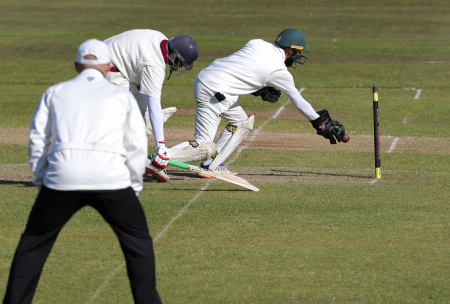
Ahead of the 2026 Season, check out the regulatory updates from the ECB
The England and Wales Cricket Board (ECB) has announced a series of regulatory updates that will come into effect for the 2026 season, alongside changes to how future amendments are communicated to the recreational game.
Earlier Notice of Regulatory Changes
To improve the experience of volunteers and participants across recreational cricket, the ECB has revised its internal approval process for regulations. From now on, any new or amended ECB Regulations will be communicated to the recreational game no later than Christmas preceding the season in which they apply.
Exceptions will only be made where immediate implementation is required for legal or other pressing reasons, as seen last season with the introduction of the Player Gender Eligibility Regulations. Guidance documents, which provide recommendations rather than mandatory requirements, may still be issued closer to the start of the season.
Key Changes to Conduct Regulations
A number of substantive amendments have been made to the General Conduct Regulations (GCR) and Recreational Conduct Regulations (RCR), including:
1. Disciplinary panels will have the ability to draw negative conclusions from a participant’s non-cooperation with a disciplinary investigation (see Regulation 19 of the GCR and 14(b) of the RCR).
2. Where an RCB or league refers a serious/complex case to the Cricket Regulator, the Cricket Regulator can issue a standalone charge if the referred participant fails to co-operate with the Cricket Regulator’s investigation (see Regulation 73 of the GCR and 30 of the RCR). This power will be reviewed following the 2026 season.
3. There will be a 14-day deadline for participants to respond to any charge(s) brought by the Cricket Regulator under a serious/complex case referral (see Regulation 74 of the GCR and 31 of the RCR).
4. An ‘admissibility of evidence’ provision will be included in the Regulations, which provides that facts can be established by a disciplinary panel by any reliable means (see Regulations 32 and 79 of the GCR and 14(e)(iii) and 36 of the RCR). This would allow evidence such as video footage of an incident to be used where available, and disciplinary officers can also request footage of matches as part of their investigations (see Regulation 19 of the GCR and 14(b) of the RCR).
5. Guidance has been included that playing suspensions for junior cricketers should be expressed by reference to the number of matches that must be missed, rather than the number of weeks, as a suspension in weeks can have a disproportionate effect on a junior cricketer (see Guidance Note 11.2 to the GCR and Guidance Note 9.2 to the RCR).
6. The Regulations have been updated to clarify that a ban which applies to ‘all cricket’ means cricket that falls under the regulatory jurisdiction of the ECB (see Regulation 105 of the GCR and 73 of the RCR).
7. Further guidance has also been included for disciplinary panels to clarify what types of activity are covered by any ban they impose where an individual has multiple roles in cricket e.g. where a sanctioned individual is a player, coach and umpire, it should be made clear which of these activities are covered by any ban (see Guidance Note 11.3 to the GCR and Guidance Note 9.3 to the RCR).
8. Given their severity and impact on individuals, lifetime bans imposed under the Regulations can be reviewed and potentially reduced in circumstances where the individual does not pose a threat to other participants and has taken significant steps to redeem themselves to justify their rehabilitation back into recreational cricket (see Regulations 107-117 of the GCR and 61-71 of the RCR).
9. Certain provisions in the GCR can be customised by RCBs and leagues to suit local disciplinary customs/practices. To prevent versions of the GCR being customised too heavily beyond what was intended, additional guidance has been added to clarify the scope of permitted amendments and the ability to customise certain provisions has been removed1. The Regulations also now stipulate that any amendment which goes beyond what is permitted by the GCR will be deemed deleted and automatically replaced with the original provision from the GCR (see Regulation 3(c) of the GCR).
10. The National Counties Cricket Association has been included in the list of organisations that are required to adopt the GCR (National Counties themselves are already required to do so) (see definition of Relevant Cricket Organisation in the GCR).
Disparity Regulations Update
Minor amendments have been made to clarify that the Disparity Regulations apply to ECB-organised national club competitions, but not to talent pathway competitions.
Request for League Information
To support leagues more effectively and strengthen stakeholder relationships, the Cricket Regulator has asked each league to provide:
• The name and contact details of their disciplinary officer (or equivalent)
• A copy of the final version of the GCR or RCR adopted for the 2026 season (where applicable)
This information will ensure the Cricket Regulator has the relevant regulations available should a serious or complex case be referred and will help provide an overview of regulation adoption across the recreational game. The ECB has confirmed this does not indicate a more proactive review of league regulations.
Leagues are asked to submit the requested details by email to: recreationaldiscipline@cricketregulator.co.uk
Recent news


.png)
Events
There are no events to show yet.


